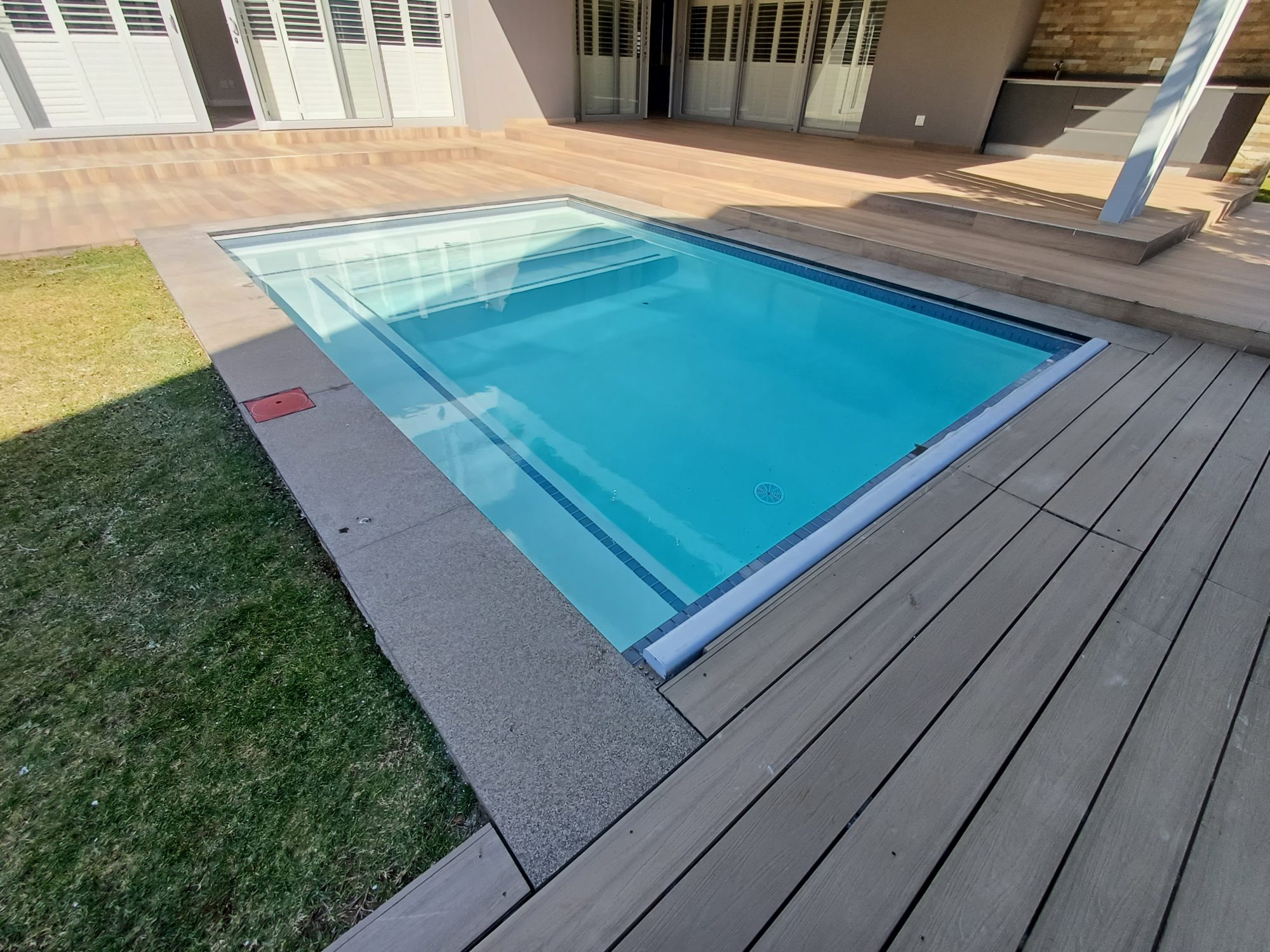
Spring is the perfect time to focus on water chemistry. Many pool owners start adding chlorine without checking pH or alkalinity — a mistake that can lead to cloudy water and plaster damage.
Step 1: Test Your Water
Use a reliable test kit to check pH (7.2–7.6), total alkalinity (80–120 ppm), and chlorine levels (2–4 ppm). Proper testing helps you know exactly what adjustments are needed.
Step 2: Adjust Chemistry
If pH is high, add acid. If too low, add a pH increaser. Alkalinity acts as a buffer, keeping pH stable, so adjust it first before adding chlorine.
Step 3: Chlorinate Properly
Once water is balanced, add chlorine. Consider a shock treatment if the pool shows signs of algae or if it hasn’t been used for months.
Why it matters: Balanced water ensures chlorine works effectively, prevents algae, and protects your pool surfaces.
Pro Tip: If you’re constantly battling pH swings, poor circulation or old filter media could be the culprit.